First distinguish a blockage, a leak and an odor pathway
A slow drain is a flow problem; a leaking drain allows water to escape; an odor problem may involve a trap, vent or another pathway. They can overlap, but they call for different evidence. Tell the provider whether the main concern is recurring stoppages, visible wastewater, dampness during fixture use or an unexplained smell.
Sewer piping can also admit groundwater through defects rather than visibly leaking outward at the time of inspection. EPA describes infiltration through cracks and leaky joints as a collection-system concern. Ask the provider what the proposed test is intended to establish: pipe condition, a water escape point, a connection or an odor route.
Respond safely to sewage or uncertain gas odors
Avoid contact with wastewater and keep people away from a sewage-affected area. Stop using affected fixtures and seek professional direction when use causes a backup or visible discharge. Do not enter a flooded crawlspace or open a backed-up cleanout yourself. Diagnosis and contaminated-material cleanup are different tasks, and both may need attention.
Do not assume a rotten-egg smell is harmless sewer odor. If you suspect natural gas, evacuate immediately and call the gas utility or 911 from a safe location. If fumes cause illness or there is immediate danger, leave and call 911. Sorting out the odor source must not delay a safety response.
Symptoms that help define the investigation
Record which fixture was used, when the symptom appeared and which other drains were affected. A ceiling mark after an upstairs shower suggests a different investigation from a yard wet spot or multiple fixtures backing up. Photos and a simple fixture-use history can help the provider choose where to begin without requiring you to reproduce an unsafe overflow.
- Moisture or dripping that appears during use of a particular sink, shower or other fixture.
- Repeated stoppages despite previous clearing, with records of where the blockage occurred.
- Wastewater at a cleanout or another drainage opening.
- Persistent unexplained dampness near a suspected drain route.
- Recurring odor with no visible wastewater, after immediate gas concerns have been addressed.
Possible pipe defects and other causes
Cracks, separated joints, damaged connections and deteriorated pipe can warrant further investigation. Roots entering existing openings can contribute to blockages. EPA also identifies grease and inappropriate materials as common obstruction causes. Clearing such a blockage addresses flow; it does not establish that the pipe wall or joints contain wastewater properly.
Odor alone does not prove an underground sewer break. EPA's indoor-air guidance describes dried traps and poorly located vents as possible sewer-gas entry pathways. The provider should consider the actual symptom before choosing a buried-line camera survey. If the concern is indoor dampness, ask how fixture seals, supply plumbing and other possible water sources will be distinguished.
A useful diagnosis connects the symptom to the pipe
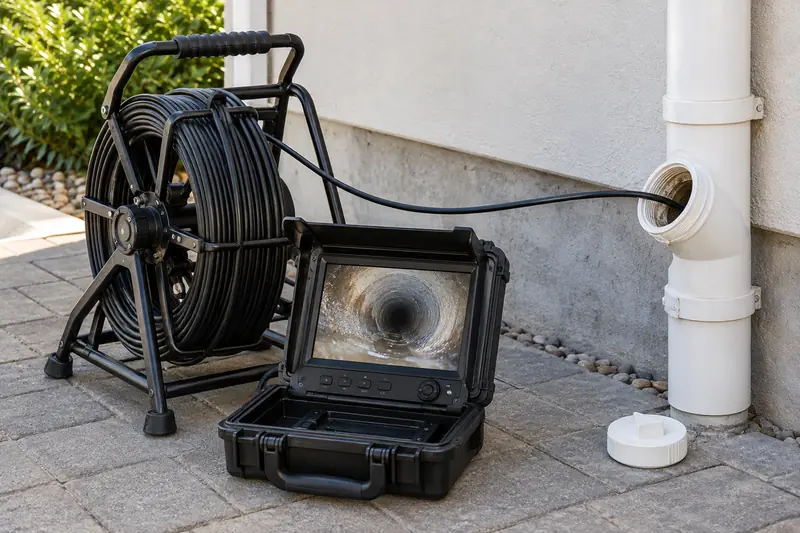
Begin with available drain history, previous recordings and accessible connection points. Agree on which branch or lateral is included and how far the provider expects to inspect. If the pipe is blocked or obscured, the provider may need to assess whether cleaning is appropriate before a useful camera inspection can continue.
The investigation may combine a camera view with surface locating or a separate test directed at water containment or an odor pathway. Ask why the additional test is needed and whether it could affect occupants, fixtures or adjacent properties. Opening finishes, installing access or isolating a section should require an explained scope and authorization.
Request a record that separates observations from conclusions: a visible crack, an observed active leak and a suspected hidden leak are different findings. Include the entry point, inspection direction, distance references and any stopping point. A limited inspection should state which portions remain unexamined so the next provider can use the evidence appropriately.
Compare sewer and drain investigation methods
EPA's collection-system guidance describes camera inspection, smoke testing, dye-water testing and integrity tests as distinct tools. Availability for a particular building depends on pipe condition, access and the provider's proposed scope. No single method answers every drainage question.
| Method | Useful purpose | Main limitation |
|---|---|---|
| Drain camera inspection | Records visible internal defects, roots and obstructions. | Debris, water and restricted access can hide conditions; a clear image is not a watertightness certificate. |
| Camera-head locating | Relates an in-pipe transmitter to a surface position. | It locates the transmitter; the camera must first reach the relevant point. |
| Professional dye tracing | Investigates a selected flow path or connection. | It answers a targeted question rather than checking every joint. |
| Professional smoke testing | Investigates certain drainage or vent-system air pathways. | A smoke route needs interpretation and does not measure wastewater leakage. |
| Suitable isolated-section integrity test | Assesses containment in a selected pipe section. | Safe isolation, pipe condition and appropriate procedures determine suitability. |
Understand camera and locator limits
EPA's condition-assessment report explains that conventional CCTV shows visible internal surfaces and is affected by flow, image quality and obstructions. It does not show the surrounding soil supporting a pipe. Ask whether the recording actually shows the suspected defect, and whether the provider needs another test to connect it to the observed moisture.
RIDGID's locator guidance describes locating the transmitter in a compatible camera head. Estimated depth and position can be affected by pipe material, nearby conductive structures and interference. Ask for surface marks and their stated uncertainty before access work. A distance counter on the recording and a surface locator provide different information; neither alone confirms the failed joint.
Preparation for an occupied property
Supply earlier drain-clearing invoices, camera files, pipe plans and details of additions or shared connections if available. Tell the provider about sensitive finishes, inaccessible cleanouts and any chemical drain products recently used. Arrange permission from the owner or manager and identify who can authorize extra work if access becomes necessary.
Ask whether occupants will need to avoid particular fixtures during inspection or testing. Smoke testing needs advance communication, including discussion of occupant concerns and the provider's preparation requirements. Keep children away from work areas. Do not remove cleanout caps, improvise pipe plugs or enter confined spaces as preparation.
What affects cost and proposal comparisons
Factors to discuss include the number of branches, accessible entry points, inspection length, existing blockages and whether the concern is beneath a slab or behind finishes. Confirm whether the proposal includes drain clearing, camera recording, surface locating, targeted testing and a written interpretation. A recording without an explanation may leave the original leak question unanswered.
Ask how additional charges are approved if a blockage prevents inspection or the suspected route differs from the available plans. Separate diagnosis from excavation, pipe repair, cleanup and finish restoration. For a shared lateral or suspected public-system problem, confirm the responsible party with the relevant owner or agency before committing to repair work.
Use the findings to choose the next step
A local connection repair, pipe rehabilitation and replacement address different conditions. Ask the repair provider to show how the recommendation follows from the documented defect and whether the rest of the inspected line supports that choice. The availability of a trenchless method does not establish suitability for every damaged pipe or drainage layout.
Agree on a verification step after repair and request updated records. Restored flow and restored containment are separate questions. Call Hydriva with the drainage symptoms, cleanout access, and any camera footage or earlier report to discuss the investigation. Explain whether the concern is leakage, repeated blockage, or an odor pathway so the scope addresses the right question.
Inspection notes
When comparing the findings with a repair proposal, use the guide to reading a leak detection report to separate tested boundaries, suspected locations, and confirmed defects.
Sewer & Drain Leak Detection questions
What affects the cost of sewer or drain leak detection?
Cleanout access, line layout, prior blockages, required preparation, and the specific containment question affect the scope. Ask whether cleaning, camera inspection, additional testing, excavation, or repair are separately authorized. Call with the symptoms and existing footage to discuss the investigation before comparing repair options.
What location details help arrange a sewer investigation?
Give the city, state, address, affected fixtures, and known cleanout or shared-line arrangement. Identify the owner or manager who can approve access. Call with those details to discuss the private-system scope and availability; the visible symptom does not determine public or private responsibility.
Can a sewer camera prove that my drain does not leak?
A camera can show accessible internal conditions, including some visible cracks and active water entry. It cannot establish the watertightness of every joint solely from a recording. Water, deposits, bends and obstructions can limit the view. Ask which sections were inspected and whether another test is needed for the specific containment question. Keep the original recording and the provider's interpretation together for repair planning.
Does a recurring clog mean the sewer line needs replacement?
A recurring clog supports investigating the cause, but does not by itself determine the repair. Ask for evidence of the obstruction and the pipe condition after appropriate clearing. The next step should reflect the documented problem, its location and the surrounding inspected line. A proposal for replacement should explain why maintenance, a connection repair or another appropriate option would not adequately address that condition.
Can smoke testing locate a wastewater leak beneath a floor?
Professional smoke testing can help investigate certain air pathways in drainage and vent systems. A smoke escape may guide further investigation, but it does not by itself measure liquid loss or establish the complete repair scope. Ask what the test is intended to find and how a result will be confirmed. Occupants should receive preparation information from the provider; do not attempt a household smoke test.
Why is my sewer odor present without any visible leak?
Odor can enter through a trap or vent pathway without a visible wastewater spill. EPA describes dried traps as one example. A provider should investigate the symptom before assuming a broken buried sewer. If you suspect natural gas or cannot safely distinguish the concern, leave immediately and contact the utility or emergency services from safety. Do not stay inside conducting odor or fixture experiments.
What should I receive before agreeing to excavate a sewer line?
Request the evidence supporting the repair location, the inspected extent, surface marks where available and any remaining uncertainty. Ask who confirms responsibility, obtains required authorizations and restores the opened area. The proposal should describe what happens if further defects appear and how the repair will be checked. Diagnosis, excavation, contaminated-material cleanup and restoration should have clear responsibilities instead of being assumed parts of one visit.
Related inspection guides
Compare other leak detection services from Hydriva, or find your city and state in the location directory.
Sources and further reading
- EPA: Sewer overflow causes, root intrusion and infiltration
- EPA: Condition assessment technology and CCTV limitations
- EPA: Wastewater condition assessment white paper
- EPA: Sewer cleaning and inspection fact sheet
- EPA: Collection-system inspection methods and smoke-test coordination
- RIDGID: Camera transmitter locating and field accuracy limits
- EPA: Dry traps and other indoor pollutant pathways
- CDC: Avoiding contact with sewage-contaminated standing water
- SoCalGas: Response when a natural gas leak is suspected